|
Dec 14, 2007
Avoid foreclosure
There are two types of sellers:
- Those who want to sell;
- Those who HAVE TO sell.
We hear, almost on a daily basis, from home owners in the second category; they are desperate to get rid of their houses for any number of reasons, such as:
- They are behind on payments and have no hope of getting current before a foreclosure;
- They must move and have no equity to pay selling expenses on their home;
- They must move and they cannot rent the house for the amount of the payments;
- The payments will increase because of taxes or a loan rate adjustment and they won’t be able to meet the new payments.
Home owners who find themselves in any of these positions need to bite the bullet and act fast; that does not mean they should act with thoughtless haste. The immediate goal is to accept the fact that the current ownership situation is unsustainable. No matter how much the owners would like to keep the house, sitting back and letting time pass will not change things. They must make an informed decision and stick with it. The goal will be to avoid foreclosure.
There are several options. The first is to sell the house at a loss—take an economic blood bath—and go to closing with a chunk of money to get rid of the house; not a good choice for most owners; an impossible one for those who aren’t even able to meet current payments. Another option is the prolonged way to take an economic blood bath: rent the house at a loss and bleed money slowly instead of doing so in one large chunk; that’s also not a good way for most folks to unload a house.
Another method is to sell the house through owner financing to someone who is willing to make larger payments—after making a good down payment—for the right to own the house rather than just rent it. In the current market this will work in a few rare instances; but it will become a better and better method as there are more people with damaged credit who cannot get a loan from increasingly-scared or weak lenders who have come to realize that making sub prime loans is a good way to lose a lot of money.
For most home owners the best path will be the sale in compromise, more popularly known as a short sale. A short sale means the lender accepts payment short of what’s owed on the loan. The short sale avoids a foreclosure, and generally helps the lender as much as it does the home seller for more reasons than I have room to go into here. The important point is that if a short sale closes, the home seller avoids the many problems associated with a foreclosure.
Most short sales close with the help of real estate agents; most lenders insist that agents be involved in the process. Do all short sales close? No. Do all real estate agents know how to do a short sale? No. The more experienced the agent is in working with lenders’ loss mitigation and short sale departments, and the entire short sale process, the more likely it is that the deal will eventually close. An inexperienced agent will probably not sell the house in the short sale process; the house will go through foreclosure. The very experienced agents will close 85% of their short sale listings. Some short sale houses don’t sell for a number of reasons, including reasons brought about by the lender, the seller, or the market; that’s the 15% of the listings that experienced agents are not able to sell.
A foreclosure negatively affects the home owner to a much greater extent than does a short sale; that’s the reason for working to get out of a bad situation rather than throwing in the towel and letting the lender take the house. The short sale can help the home owners’ cash positions as well as their credit. We’ve worked with home owners in trouble for over 25 years. If you have questions about a short sale, or know someone who might need more information about one, give us a call. - ☺md
Dec 10, 2007
The bubble continues to pop; advice for sellers
I spoke about the sound of a popping real estate bubble back in 2005; nobody was talking about it then; everybody seems to be aware of it now. We currently have a real buyer’s market, and becoming more so by the day. If you’re a buyer, it’s time to start looking for deals. And there are some real deals out there. Here are some examples. Not long ago we sold a million dollar house for 60 cents on the dollar; we recently closed on a house for 67 cents on the dollar of the loan balance, two lenders took a $100,000 hit; a small house with a $110,000 loan balance netted the lender slightly over $70,000. In this type of market, what can sellers do to maximize their sale price?
The answer is condition. There is nothing better that the home seller can do to a property to help it sell quickly and for maximum price in an extremely competitive market than to make it shine; in other words, you must beat the competition. New paint and carpet are generally of foremost importance in getting a house to look better than the competition; but sellers can’t stop there. Pets, furniture, and the overall “feel” of a house can make a huge difference in how well a property sells.
Here’s an example of a potential problem. I’ve known several buyers who would not buy a house whose owners had pets because their children have allergies aggravated by animals; the allergens will not be completely eliminated with carpet cleaning. If the carpet is replaced, pets should be kept off the carpet till the house sells; preferably, remove pets from the property to avoid that possible selling obstacle.
Colors can kill a sale. Repainting the interior of a house in colors that are pleasing to the seller can result in colors that offend the buyer. Neutral, light colors in floors and walls is the best way to prep a house for the selling process.
You must also understand what is worth fixing, and what might be a huge waste of money. Sold By Owner covers a range of items that the home seller can do to help sell the property without breaking the bank. - ☺md
Dec 1, 2007
Understanding a good deal...why price per square foot is important
In a buyers' market it's easy to imagine that nearly every property is a good deal; prices in our market are not climbing enough to keep up with inflation (real inflation, and not the sugar-coated lies we're getting from Federal agencies); in fact, due to the bloated residential market and the increasing number of foreclosures and government-agency-acquired properties, plus all the new homes available, a host of properties have declined in price, some quite significantly. How can buyers possibly determine which sellers are offering a good deal, and which ones are in what we call La-La Land?
Price per square foot ($/sf or p/sf) is an excellent way to separate La-La Land from the Real Deal. Back in the mid to late 80s we bought a good number of investment properties; many of them were in south Fort Worth. Our goal was to buy the houses for less than $30/sf; generally we were looking for houses considerably under that figure, often hitting under $20/sf; a good number of very modest houses we bought under $2/sf (that's not a typo, that's two dollars/sf). This meant that we wouldn't even consider a house that was priced above $30/sf. It was a convenient way to search for the kind of deals we were looking for.
For this house hunting shortcut to be effective, buyers must be careful to segregate type and size of houses. For example, there's a huge difference in p/sf between a 5000 sf house in relatively-modestly priced Mesquite or north Fort Worth and the luxury Park Cities areas; things won't compute when lush hardwood panelings and slate floors are compared to the more lowly painted sheetrock walls and vinyl floors.
On the other hand, comparing a 5000 sf house and a 1000 sf house of similar construction in Lewisville won't compute either. It is always cheaper p/sf to build bigger; that's because simply adding square footage does not involve increasing the cost of items like the lot, the garage, the concrete flatwork, main plumbing and electric lines, and expensive items like kitchen cabinets and major appliances. There's a more detailed discussion in Home Buyer's Confidential on this and other time and money saving subjects.
The key is to look at the p/sf of sold properties in and around areas where you contemplate on purchasing. Once you have a handle on figures for different types, sizes, and seller types, you'll easily and quickly differentiate Good Deals from La-La Land ones. - ☺md
Nov 27, 2007
I don’t want to rent my house...the tenants will trash it!
Yes, and if you loan your Lexus to a sixteen year old who’s had ten beers he’ll trash it; maybe even kill himself in the process.
Not a week goes by that we don’t hear from home owners about the fear of renting a home because they can’t chance being stuck with “bad” tenants. Those of us who have managed rental properties for a few decades have all known “bad” tenants; we’ve had our share of trashed houses. But we all learn the hard way; or we learn from others the easy way. We’ve not had a bad tenant, or a trashed house in years.
For some home owners with little, zero, or even negative equity, renting is the only alternative to throwing in the towel and either letting the bank have the house, or working for a sale in compromise (two easy ways to hurt credit ratings). There are three easy steps to becoming a happy landlord:
- Rent only to “good” tenants;
- Understand that your tenants are your customers and treat them that way;
- Maintain the property as if all your wealth depends on it.
The biggest hurdle is economics: understand your position, accept what the market gives you, and refuse to let your emotions guide you. In other words, don’t rent your property without a spreadsheet; that way you’ll rent at the right price to obtain the right tenants.
If you have a property you must vacate and either sell or rent, call us for ideas on selling or getting good tenants, becoming a top notch landlord, and your overall best course of action depending on your economic position. - ☺md
Nov 16, 2007
"We have not seen a nationwide decline in housing like this since the Great Depression..."
This is a quote from John Stumpf, chief executive of Wells Fargo. He added, “I don’t think we’re in the ninth inning of unwinding this. If we are, it’s going to be an extra inning game.” It’s an interesting way to explain banks’ troubles. Citigroup wrote down $11.28 billion worth of bad loans for the third and fourth quarter. Merrill Lynch $8.48 billion, Morgan Stanley $4.68 billion, Bank of America $3.88 billion, Barclay’s $2.7 billion, Wachovia $2.48 billion...there are too many more to mention.
Bad loans on housing has caused much of the grief; there’s a real domino effect here. Since I like to look at the half-full glass rather than the half-empty one, I think all of this grief will be good for buyers; extremely good. Not long ago we closed a deal where two lenders wrote off over a third of the loan amounts; believe it or not, the deal helped the seller and the banks avoid more pronounced losses. But it was such a great deal for the buyers - to the tune of a hundred grand.
I see the housing market during the next two or three years going through the “lost sack of money” syndrome. Imagine a jogger finds a sack of money on the side of the road; it has $100,000 cash in it; there are no identifying marks on the sack; the bills are legitimate, of different denominations. Whoever dropped the sack took a great loss; the jogger has a great gain. The banks will be the ones dropping the sacks; buyers will be the joggers finding them. - ☺md
Nov 9, 2007
The greenback is sinking fast
For a brief instant this morning, the dollar index hit an all-time low of 74 - the first time it’s dipped into that number. The index has since stabilized into previous lows in the 75 range. What does that mean? It means we’re printing dollars (and creating credit and digital dollars) with no concern for inflation. But inflation is heating up. While we have a large supply of homes in the market, in the long run inflation will hold up or bring back home prices. Don’t sell your home yet if at all possible; buy a good deal in real estate if at all possible.
On another note, Wachovia announced today that it lost $1.1 billion in loan losses in October. Loan losses mean more foreclosures; that translates to more foreclosures and more deals for buyers. Lender loan losses are not surprising; our own John Dubois was fond of saying back in 2005 that “If you can fog a mirror you can get a house loan.” He was dead-on right; today it’s a lot tougher to qualify for a loan; but still a lot simpler than back in our grandfathers’ day. - ☺md
Nov 8, 2007
The country’s largest S&L bleeding profusely
WaMu (Washington Mutual) is the nation’s largest savings and loan. They announced that they expect a $1.1-1.3 billion loss in this quarter; and about the same amount in the first quarter of 2008. Ouch! Could they be taking a lot of houses back in foreclosure? Yes. Are there some real deals out there for buyers? Definitely; however, some are not deals at all; you can overpay in any market.
If you’re looking to buy a home - and get a really good deal - this is one time you need someone with a lot of experience to help you with your purchase. Ask your agent how long she/he has been in the business. Make sure you have a very qualified agent helping you with your home or investment real estate purchase. Don’t buy a new home without an experienced agent. All good, reputable builders will be happy to work with you and your agent.
Just in case you don’t have a good agent, give us a call; we’ll be glad to help you. - ☺md
Oct 31, 2007
Inflation soaring - hold on to your house
This week’s edition of the Economist gives us some scary figures. It says that an average of “all items” is going up not at 2% or 3% per year as the U.S. government claims, but at 16.7% per year! Food is going up even faster – at 31.6% That’s not surprising since the Fed excludes three of the highest-priced items from the CPI: Energy, food and the price of our homes. - ☺md
That’s nifty...and convenient. It would be nice if folks could exclude increases to their mortgage payments, the cost of their food bills, and fill ups at the gas station; heck, even if those costs only went up 3% per year, the 99 cent per gallon fuel we bought at the end of the twentieth century might only be a buck thirty today. For those who owned (and owed) homes back in the 70s, how about having that cozy payment now? Of course, with homes those who stay put for a number of years can hold payments down considerably; trading up every few years can be costly. - ☺md
Oct 25, 2007
Can you “fix” a broken foundation?
Soil movement is a problem for buildings everywhere. You typically cannot “fix” a broken foundation; you can’t glue it back together like you can a broken plate. Once a foundation has broken, it’s broken; just like a broken plate that you can’t glue back. You can lay a broken plate on the table with lot’s of cloth padding underneath it and it will stay level and hold food; but it’s not in one piece as it was before it broke. But if you were to take a broken plate and glue it to a flat piece of iron that had the shape of the plate, you’d have a very useable plate, even if it were a bit heavy.
A house foundation works the same way. You can dig holes every six feet around the perimeter of the house foundation, pour heavy, steel-reinforced concrete pads in those holes, and when the concrete cures the foundation can be leveled with inexpensive hydraulic jacks. This would be like putting cloth padding under a broken plate; it won’t stay level for long. Other, better methods, use concrete piers, push or helical piers, mud jacking, hydraulically driven concrete or steel pilings; I could go on and on with a list of leveling methods. But here’s the key point: no matter what “good” method is used, nothing can guarantee the foundation will stay level except the company that does the work. The longer the company has been in business, the more valuable is the guarantee; the more experienced the owners, managers, and workers of a foundation leveling company, the more valuable is the guarantee; and the more “seasoned” references the foundation leveling company provides, the more valuable is the guarantee. In other words, check them out, and check their references - the older the references, the better. - ☺md
Oct 15, 2007
Gold and houses give the real story on inflation
When I was in college (I majored in Home Building) I worked for a small homebuilding company in San Antonio - that was in 1965. I did the design work on the modest houses we built. The homes were typically 3 bedrooms, 2 baths, and a double carport or double garage; prices ranged from $9,500 to under $11,000, the average house had 1,200 s.f. of living area and sold for $10,000. In 1965 gold averaged $35.12 per ounce. Simple math tells us that you could buy one of our average houses for 284.7 ounces of gold.
Today gold is priced around $750 per ounce. In dollar terms, the 284.7 ounces it took to buy our modest 1965 homes are worth $213,525; however, those modest homes in San Antonio are not worth that many dollars. You can buy one of those same houses for a mere 140 ounces of gold at this time. Does this mean real estate is not a good deal right now? That it might be better to buy gold? Absolutely no to both questions. From a buyer’s perspective, real estate is a bargain at the moment.
Can it become a better bargain in the future? Yes, but that does not mean today’s bargain will be a bad deal in the future. If you buy correctly today, that good deal now should still be a good deal in the future.
So what about inflation? Inflation is a measure of the sinking value of money - dollars, fiat currency, colored paper the government tells us has value. We measure inflation by the rising cost of goods in relation to money. But inflation is really a measure of the sinking buying power of paper money. As you can see by the example above, gold - real money - has not inflated; rather, there has been deflation when the price of houses is measured in real money terms. It now takes less real money to buy the same house than it did over forty years ago; however, it takes about ten times more fiat currency to buy the same house.
What does all this tell us? Perhaps it’s time to put your savings in real money, and buy bargains in real estate. This is a great time to buy investment real estate. Want to learn more? Call me for more ideas and suggestions on your specific situation. - ☺md
Oct 10, 2007
Still lots of property for sale in the D/FW Multiple Listing Service
The statistics for the regional MLS don’t look good for sellers this month. Since we work for sellers and buyers, we have to be very careful we don’t do what the folks on Wall Street and so many people in the media do: take sides. If the stock market goes up, you see happy faces in newspapers and TV. Sellers would have a happy face; they can get more money if they sell their stocks. But what about buyers? They have to pay more; and lately they pay more for stock that pays little, if any, in dividends.
Back to real estate and the MLS. It’s good news for buyers: lots of residential listings. The means there are more sellers than there are buyers. At the end of September there were over 53,000 residential listings for sale - most of them single family houses. That’s up over 4% from a year ago. The real bad news for sellers is that in September there were less than 6,500 residential sales. These statistics DO NOT take into account the huge number of new homes that home builders have under construction, or completed that are not in the MLS system.
As in any economic system, a debit here means a credit over there. This is very good news for buyers; good deals are everywhere. The news is not rosy for sellers; however, some sellers can look on the bright side of this. Those wanting to move up might get beat up on the selling end, but they will have a chance to beat up the seller of the house they buy. The trade off is really no different than in a balanced market, or even a sellers’ market. The point here is that if you are selling and buying in the same market, you’ll do quite well if you move up.
There are two types of sellers:
- Those who want to sell, and;
- Those who have to sell.
If you want to sell and move up - assume you’re selling in Grapevine and buying in Grapevine - go for it; you’ll come out ahead. If you want to sell in Carrollton, and buy in Highland Park, watch out! You’ll get beat up both ways; of course, if you can afford to buy in Highland Park, the sale in Carrollton won’t matter.
Those who have to sell and won’t be buying for a while have a different problem. The problem is greater if there’s no equity, or the sellers are upside down in equity. If that’s your problem, you need to call me. Every situation is different, but generally there IS a solution. Whether you want to sell, or have to sell, make sure you have someone with a lot of experience working for you. This is no time to seek the advice of someone who has not been through at least one real estate cycle - real estate cycles last seven to ten years. - ☺md
Oct 1, 2007
Too late to save a sinking ship
I had a call from a home owner in trouble today. She had lost her job and got behind on her house payments. After several months she had landed another job with not quite the same income as her previous job. She wanted to avoid foreclosure; didn’t think she could catch up her payments, even with a loan modification from her lender. She had an adjustable rate mortgage (ARM) that was to reset next year and payments were to rise beyond her means.
I asked her for information about her house and the loan; it sounded like there was a strong possibility I could help her avoid foreclosure. I then asked about any correspondence she’d had with her lender. That’s when she confessed that foreclosure is set for tomorrow, October 2nd (known as “Texas Tuesday,” the first Tuesday of the month, the only day foreclosures are allowed in Texas). My heart sank for her. There was no way to save this sinking ship; she’d called me too late.
I don’t get many calls where we don’t have time to at least give avoiding foreclosure a good try. If we’d had even a week we could have had a chance; not a huge chance, but the effort would have been well worth a try. - ☺md
Summer 2007 Special Edition from the FDIC - 51 Ways to Save on Loans and Credit Cards
Here is an excellent, common sense report that everyone should read; it’s not just about real estate loans, but loans of all kinds. Click here for the full report.
Interesting News from the DFW MLS
At the end of April the Dallas Fort Worth Multiple Listing Service (North Texas Real Estate Information System) had a few units shy of 53,000 residential properties for sale; up 10% for single family, and 17% for condos and townhouses for the same time a year before. Ouch! for sellers. Great! for buyers.
But wait! There’s more. Not all good deals are really good deals for buyers. Some are not good deals at all. Buyers MUST have a very experienced agent on THEIR side. Here’s what I mean: Is a podiatrist a medical doctor? Yes, a DPM goes through a four year medical program. Would you want a podiatrist to operate on your brain? Of course not; that’s not their specialty. Then don’t buy a “good deal” from an agent with little experience; it might turn out to be a bad deal. This is the time to get REALLY good deals.
Call me; I’ll show you how.
Maurice Dubois
The Housing Wiz
Bad News for Some; Good News for Others
It’s interesting that for almost every bit of bad news, there’s a bit of good news. Look at all the poor people who are losing their homes to foreclosure. That’s the bad news.
Where’s the good news? It’s on the other side of the coin; it lands on those buying the foreclosed properties. Prices of foreclosed properties are low, and getting lower. Banks are taking a bath; many sub-prime lenders have already drowned in the bath water. There are bargains, and there will be more and better ones during the coming months and years.
I’m not sure the buying opportunities will be as juicy as the late 80s and early 90s, but they will be almost as good. It’s a great time to buy a home to live in, or an investment property. Call us for buying ideas.
Maurice Dubois - The Housing Wiz
Plenty of New Homes Available
Steve Brown reports in the Dallas Morning News that the Dallas/Fort Worth area has almost 12,000 new homes ready for new owners. That’s great for buyers; but it’s not so good for home builders, or for sellers who MUST sell.
Some builders are pulling back on the number of starts; some bankers are forcing builders to pull back. Young home builders won’t remember the carnage in the early 80s, so they might continue to add to inventory and lessen their chances of selling at a profit. Seasoned builders will pull back; however, large builders have a hard time stopping the thousand ton locomotive they’re driving; they have to cut back, but they can’t stop.
The existing home inventory is still flush with tens of thousands of available properties. All of this makes it a wonderful chance to pick up a bargain new home. If you do it on your own, you won’t have value information that’s essential to getting a good deal; you also won’t know who are the best builders, the best designs, and the best deals within specific areas and subdivisions.
Give us a call for expert help.
The Housing Wiz
Foreclosures Up Everywhere, Including Texas
Of the top 17 cities in home foreclosures, Texas has four. The third quarter of 2006 put Detroit number one and Dallas number five. Fort Worth/Arlington were in 7th place, San Antonio number 11, and Houston number 17. Ouch!
|
Rank
|
Metro area
|
Q3 2006 total
|
|
1
|
Detroit-Livonia-Dearborn, Mich.
|
10,316
|
|
2
|
Fort Lauderdale, Fla.
|
8,431
|
|
3
|
Denver-Aurora, Colo.
|
9,825
|
|
4
|
Miami
|
9,380
|
|
5
|
Dallas
|
13,422
|
|
Austin came up 26, and El Paso 49. Chicago was number 19, but it had the most foreclosures of any: 16,155 total homes taken from their owners.
The chart above shows the rankings for the top five foreclosure cities. I’ve been in housing almost 42 years and I’ve never seen so many crazy loans made with so little borrower equity going into the houses. So it would not be surprising to me to discover in a year or two that 2006 was just the tip of the iceberg.
After peaking at almost 51,000 residential listings in the MLS in September, we’re down to almost 48,000 at the end of November. Unfortunately, the lower figure for November is still 9% higher than November of 2005. The good news is that the Dallas/Fort Worth market probably won’t get slammed as we’ll see in areas where they had ridiculous price increases. Our price increases have not kept up with the real rate of inflation; in some cases, they’ve not kept up with the phony inflation numbers we get from the government.
The Housing Wiz
Texas Cities - Large and Fast-Growing
Texas cities were in the top ten most populated in the country for 2005. Houston was #4 nationwide with over 2,000,000 population; San Antonio with almost 1,300,000, and Dallas with more than 1,200,000. For Dallas, the figure is a bit deceiving because the metropolitan area includes not just Dallas, but Fort Worth, Arlington and Plano; that’s four cities of the ten largest in the state. But there’s more. When you consider other large suburbs like Garland, Irving, Mesquite, Grand Prairie, and Carrollton with over 100,000 each, plus many others with tens of thousands each, the DFW Metropolitan Area comes in at about six million population. Fort Worth was number one in the country for growth percentage from 2000 to 2005 at 15.3%. (Figures from the October, 2006 issue of Tierra Grande - Journal of the Real Estate Center at Texas A&M University).
Will the housing bubble pop here? It could; and it might just let off some air; and perhaps the DFW area is growing so fast in population that we have no housing bubble. Overproduction by builders might simply keep prices stable.
The Housing Wiz
Interesting New Statistics
The statistics for August from NTREIS has interesting information. The total number of residential listings for the end of July had crept up to 51,123. At the end of August the number moved down slightly to 50,579; however, this number is up 10% when compared to a year ago. Sales of single family homes were down 8% compared to a year ago. The average price of a single family home was up 6% to $203,186 when compared to a year ago, condos were up 12% to $168,904.
While the bubble is beginning to pop on the west and east coasts, we are having a slight leak in our bubble. Do we have a bubble? I think there might be two answers.
The first answer is that we probably have a bubble in new homes. There is not one day when we don’t receive an email from some builder with large incentives for agents and buyers. That’s a good thing for agents and buyers; not good for builders. One of the project managers of a subdivision where I’ve sold several homes this year in the $150,000 to $200,000 price range told me at a meeting the other day that they were increasing their production from 4-6 starts per month, to 30 houses per month for September, October, and November. That’s a hefty increase.
The second answer is that there might not be a bubble in the used house sector. Yes, inventory is high, but there are a lot of folks moving to our area, and if the average price of a single family home has only increased 6% in one year, that’s probably not in keeping with the REAL rise in inflation (after you consider that the government leaves out or completely deflates “inconsequential” items like fuel, food and housing).
Some of the inventory increase is coming from foreclosures and houses placed on the market by folks who cannot afford the payments after taking on Adjustable Rate Mortgages (ARMs, whose payments have been rising), or too much overall debt. One of our people was at the Tarrant County Courthouse last Tuesday doing a foreclosure. She said it was a real carnival: lots of sellers, buyers, and noise; they couldn’t all fit on the courthouse steps.
Are there some great bargains now? Some; but there will be more later. I looked at a little investment house in Arlington yesterday. The owner owes $40,000. She had received an offer of $35,000 from another investor - one of the large franchises who advertise to buy Ugly houses. Their offer was too high as the house was worth no more than $20,000 - that seller is in trouble. We did pick up a couple of houses recently; one for $17,000 and the other for $23,000. Both will sell between $65,000 and $75,000 when we’re done with the rehab work; however, we might just rent them and keep them as investment properties.
I should clear up something here. Buying a house to rehab and resell is not investing; it is speculating; it is a business like buying a dirty car, cleaning it up and hoping to resell it for a profit. Investing is buying a property to rent out; it will provide income each and every month.
The Housing Wiz
Listings Up
NTREIS statistics again were indicating that this real estate market is becoming a Buyers’ Market. There were 49,901 residential listings in the MLS at the end of June. Every day we receive offers from builders that show an excess of new homes. Just this week one builder was offering a 7% commission to agents who sell their properties - buyer agents typically get 3%. In addition there were discounts as high as $25,000 for buyers.
When you see dark clouds in the horizon, and they’re coming at you, it’s a good indication that a storm is coming your way. I see dark clouds in the horizon - and a lot of opportunities for SAVVY investors.
We’ll have news of more real estate seminars in the future. We don’t promise to make you rich quick, but we will show you how to become rich slowly as a savvy investor.
Listings Up, Sales Down
NTREIS statistics for May are interesting again. Total residential sales for May totaled 9,021; that’s good because it’s over 9% better than a year ago. However, total listings in the MLS moved up to 48,943 which is 5% greater than a year ago, and over one thousand properties more than the month of April.
We work with banks listing their REO (Real Estate Owned) properties, including the VA acquired properties. We have a good number of properties that are not yet on the market, and I’m sure most other agents working with banks have the same situation. That means there are a lot of houses that will be added to inventory.
Since we buy and sell houses through our investment companies, we get numerous calls each week from people selling out of necessity. Many of those properties will go through the foreclosure process and end up in inventory. I’ve not seen as many people in trouble on their loans for a couple of decades.
The typical seller is either not seeing great price appreciation from a year or two ago, or is literally getting beat up in the selling process. There is one consolation for sellers. If they are buying another property in this market, they get to beat up the seller of their new home, whether the seller is an individual, a bank, or a new home builder.
This is NOT the time to work with an inexperienced agent. I’ve talked with several sellers recently who overpaid for their houses - existing as well as new houses.
Call us for buying and selling information and expert help.
The Housing Wiz
Listings Up, Sales Down
The North Texas Real Estate Information System (our local Multiple Listing Service) reports that total residential listings (homes and condos) were at 47,812 at the end of April. That’s almost 2,000 houses more for sale in the Dallas/Fort Worth area than for March, and higher than a year ago. Add that to the new homes completed and available and we are right there on top, or close to the top, of any metropolitan area in the country.
Sales in April were 13% down for single family homes - ouch! Since we work with lenders in managing and listing their foreclosures, we like to keep up with foreclosures that are listed in the MLS. The numbers are increasing every month.
What does all this mean for your home’s value? Probably that it won’t increase any more than the rate of inflation, if that much. That doesn’t matter if you won’t be selling any time soon.
What does it mean for investors? That there will be some bargains in the near future - if you know how to pick them.
The Housing Wiz
Available Listings Continue to Climb
The number of listings in the Dallas/Fort Worth MLS continued to climb, although at a flatter rate. The total residential listings at the end of March stood at 45,937, up from 30,315 at the end of March, 2002. Builders keep building at a fast pace, which keeps the number of existing home sales down.
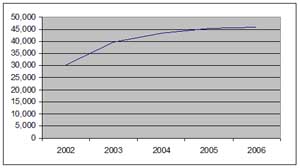
It doesn’t look like the Metroplex will be spared from the coming real estate bubble deflation, but from the looks of the MLS statistics our bubble won’t pop as will surely happen in hot markets.
One thing to think about, though, is that accelerating inflation could force everyone - everywhere in the country - to rush out of dollars and into assets, including gold, silver, and real estate. Inflation could flatten the point of the pin that would puncture the housing bubble. Stay tuned; one way or the other, things will get interesting because The Fed will get stuck more and more between a rock and a hard place as a result of dollar overprinting.
The Housing Wiz
FREE Real Estate Seminar Scheduled
Our first Real Estate Seminar is scheduled for May 18 at 6:00 p.m. In a grass roots effort to help people make informed decisions regarding home purchases, sales, and investments, we are offering the seminar at the beautiful new Cedar Hill Recreation Center. The Seminars will be offered by the local financial real estate advisors of Dubois Real Estate—seasoned veterans in the field for over 40 years.
Real estate transactions are some of the biggest financial decisions in a person’s life, and they have the potential to affect your financial stability for years to come. Due to an alarming trend of predatory lending and “get rich quick” investment schemes, we have prepared a series of FREE seminars to inform local residents, and untangle the confusing issues regarding real estate sales, purchases, and investment.
Seminar Topics Will Include:
- Buying
- Selling
- Investing
- Home loans
- Refinancing
- Prudent financial decision making
- Sound investing strategies
- Cautionary market information
- Other topics regarding real estate and finance applicable to today’s consumer market
Seating is limited, so please call Deirdra at our office and reserve a spot (972-299-2233).
John Dubois, The Housing Wiz Assistant
Investing vs. Speculating
I spoke with an “investor” recently who was looking to buy houses in the $300-$400,000 price range. He explained that he was “approved” up to $800,000. I asked several questions to determine if I could help him. I wanted to know what he did with the houses once he purchased them. He explained that he would buy them at a deep discount and resell them for a profit; he was looking for new houses.
I asked what kind of discount he needed, and he said that it had to be about 65%. I never say never; however, I’d say “quite unlikely” to his line of thinking; a line I hear several times each week. In the first place, he is not an investor; he is a speculator. True investors put their money into an enterprise so they can receive weekly, monthly, or yearly income from that investment. Real estate that has a low amount of leverage is one example. It pays a monthly return while holding the value of the investor’s money - with a lot of safety. Speculators buy something hoping to sell it at a higher price. Most stock investors are really speculators. They put their money in stock that does not pay dividends, hoping to sell their shares for more money than they paid for them. Buying a house at a huge discount to sell it for a profit is speculating.
His second flawed assumption is that brand new houses - and used houses in very good condition - are available at 65 cents on the dollar. You can buy houses at a deep discount, but be prepared to do major rehabbing. Is it impossible to find a new house at 65 cents on the dollar? No, of course not. What are the current probabilities in the Dallas/Fort Worth market? My guess is .00001% - or pretty slim.
The “guru mills” are churning at a rapid pace. They are turning out real estate “investors” by the thousands. Don’t be fooled by the hype and great sales talk if you decide to buy someone’s program for getting rich in real estate. Ask the gurus how many deals they do each month or year. Ask yourself this question, “If their method of real estate investing is so great, why are they teaching it instead of doing it? Is it possible that there is more money in selling tapes, books, and seminars than there is in doing their brand of real estate investing?”
This is NOT to say that you cannot make a lot of money investing in real estate. But this is the type of market where knowledge and caution are of prime importance. You might want to start with my upcoming book
How to go Broke Investing in Real Estate
Unless You Read this Book
Investing for the Long Term, with Minimal Risk and Maximum Profit
The theme of the book is to buy at a discount, avoid risk, maximize profit, and move away from the “investing crowd.” It will guide you to becoming a smart investor; it does not promise to make you rich overnight. I hope to have it published later this year. If you live in the Dallas/Fort Worth area and would like a prepublication manual of the book, give me a call (cell 972-814-7391). I’ll get you one for the cost of printing and postage.
The Housing Wiz
Rates Inch Up Once More
The Fed raised rates a quarter point again this week. The Fed is getting nervous, NOT because the economy is overheating, but because the dollar is getting progressively weaker. As of yesterday, the U.S. public debt stood at $8,198,626,872,332.20. That’s a tad over 8 TRILLION; of course, that “tad” is almost 200 BILLION. Yesterday’s figure is $15,488,680,875 (as in 15 BILLION) higher than THE PREVIOUS DAY.
Raising rates does not stop the overspending; but it tells the world that we are slightly concerned about the dollar dropping in value and we are willing to pay a little bit more to those who loan our country money - it’s actually a bit more complicated than that, but you get the point. The slight rise in the Fed rate will eventually trickle down to real estate. A quarter percent might not be much, but a home loan of $100,000 at 6% pays off at $599.55 per month. That same loan at 6.25% has a payment of $615.72 per month; that’s a $16.17 difference, which is $5,821.20 over the life of the loan.
How might that affect you? If you need to sell, you should do it soon. The higher the interest rates go, the lower home prices will come down. If you want to buy, the lower the rates, the lower will be your monthly payment. The market still favors buyers, so buying now makes a lot of sense. If you have questions on selling or buying, give us a call.
The Housing Wiz
Price Right to Sell Fast
When you price a house correctly, you can expect to sell it quickly. A client called a couple of weeks ago and asked us to list an investment property he had owned since the early 1980s. It needed work, but he was tired of dealing with it and wanted to sell it without additional effort on his part.
He priced it right, using data we gave him and a suggested asking price. He signed the listing agreement on January 17 and that same afternoon we had the first purchase offer - above asking price. Within three days we had received a half dozen offers, so we advised the potential buyers’ agents that we would take their highest and best offer through January 26 at 5:00 p.m. In all, we received seven cash offers and one offer requiring financing. He opted for the highest cash offer even though the one requiring financing was the highest.
The house sold fast, for more than the asking price. This is proof that the market will always set the price, whether the house is priced below, at, or above its true value. The only difference in how it’s priced is how long it will take to sell. A house that’s priced below market value always brings more than asking price, quickly; and a house priced above market value eventually sells for market value.
The Housing Wiz
Gold and Silver Soar
We watch housing news with a direct view; on the periphery, we look at all types of markets. Unless you’re into commodity trading, you might not have noticed that gold and silver are soaring, along with other metals, base and precious. There is a lesson here for housing. While real estate prices have gone ballistic in some markets, they have remained relatively stable in the Dallas/Fort Worth area. What does that mean?
For one thing, we have a lot of builders building a lot of houses, at moderate cost - in comparison to existing houses here and to all housing in some overheated areas of the country. But costs are inching up for builders for the same reason that the cost of metals is up. It’s called INFLATION. As we read in The Daily Reckoning, “In the latest reported week, more than $25 billion was added to the nation’s money supply. If this were to continue, it would add more new money in 18 months than the present value of all the gold ever mined.” That little tidbit spells INFLATION.
An inflating money supply (our money is paper, nothing more, nothing less) means less value to the paper and more value to almost everything else that paper buys. That’s gold, silver, and the materials to produce houses, including the land on which they are built. Because of the fact that our houses are not locally accelerating rapidly in cost does not mean that real estate is not a good investment. Sooner or later builders will raise prices enough to make a huge difference in value for the existing housing stock.
Here are some suggestions:
- Buy Gold - just a few Krugerrands will be a wise store of value
- Buy Silver - plain “silver rounds,” in one ounce size, currently under ten bucks each
- Own at least one rental house
Want to know how? Call us.
The Housing Wiz
Good Deals From Builders
We probably have more builders putting up houses in the DFW area than almost anywhere else in the country. Some builders have great plans and some very good deals, especially at this time of year. I spoke with one sales rep in Cedar Hill yesterday. His builder has some of its homes discounted almost $20,000. The homes are in the $150,000 to $200,000 price range.
Great plans, super discounts, and one of the best subdivisions in the Metroplex for that price range. If you’ve been looking for a new home, this is a real sleeper. If you already have a house there are ways to move up quickly and painlessly. Give us a call for details, and take a look at some of the plans we’ve included here.
The Housing Wiz
Uncured Concrete
I’ve kept track of construction on some of the new subdivisions; of particular interest to me was the concrete work.
The most critical time for concrete curing is the first few hours after it is poured. It must be kept as close to 100% humidity as possible. If humidity level drops below 80% the hydration and curing reaction can actually stop. If that happens, the concrete might only achieve half of its designed strength. Curing means keeping the concrete wet; you do that with plastic covering or by applying a coating. It appeared that none of the concrete was being cured.
Foundations and driveways don’t fail immediately, so it’s not a problem for the builder when they do so a few years down the road. They are a big problem for the home owner some time in the future.
We have a lot of construction experience. If you plan to buy a new home, we’ll help you get the best available; at no extra cost to you. Give us a call.
The Housing Wiz
The Dangers of Real Estate
Real estate would seem to be one of those professions that is ideal when it comes to a lack of danger for practitioners. We talk with nice sellers and buyers on a daily basis. We help people solve many challenges. What could be safer?
Alas, there is a dark side to real estate. According to the National Association of Realtors , on average one real estate agent is murdered - on the job - each month in our country. Real estate professionals who deal with strangers on a daily basis are prime targets for thieves, rapists, and killers.
Anyone selling a house on their own is subject to the same problem: becoming a victim. When you hire us to market your house, we not only take on the marketing role, but we take the danger off your back and put it squarely on ours.
Here’s something else we provide: answers to any real estate questions you might have; and the answers are absolutely FREE. Want a FREE online valuation of your home? Click here, it’s FREE, with no obligation on your part.
The Housing Wiz
Higher Interest Rates Means Trouble for Mortgage ARMs
A large percentage of the contracts coming into our office are tied to zero down payment loans. We also see many people buying houses with Adjustable Rate Mortgages (ARMs). ARMs are great for qualifying to buy a house; generally the loan starts off very low, and then it changes according to the way the loan is structured. Rates on the loan change depending on the interest rates currently charged according to an index of interest rates set forth in the loan documents.
The problem with ARMs is that we are still at a very low interest rate period. Because of inflation and the great need for borrowed money by individuals, businesses, and governments, there is virtually zero chance that interest rates will go down or even continue at their current pace. In other words, there is an almost 100% chance that rates will continue heading up. That’s very bad news for people who have adjustable rate mortgages.
I have talked with a good number of homeowners lately who stand a chance of losing their house because they have zero equity - they bought with zero down payment - and their loans are no longer affordable because of higher payments due to interest rate increases. With zero equity they cannot sell their houses unless they go to closing with a few thousand dollars to get rid of the house; most can’t afford to do that. And since they can’t afford to make the payments, they are between a rock and a hard place.
There is help available for some of these homeowners; but they have to act fast and certain conditions have to be present to allow them to back out of their predicament. Often a refinance is either impractical, or actually impossible.
Give me a call if you have questions about your ARM loan.
The Housing Wiz
An Interesting House Auction
I went to a house auction today, hoping to buy a house that our crew can rehab. The house had been foreclosed by a bank (DCAD shows title in Wachovia Bank), and it had been on the market for about 7 months prior to the auction. The bank had been firm on their asking price of $41,000; apparently they figured people would get bidding fever at the auction and they would get more for the house. After coming up with an accurate market analysis, I figured that the house could sell in like-new condition for just short of $70,000.
Since we’re constantly making offers on Bank REO (Real Estate Owned) properties, I figured this little 3 bedroom, 1 car garage house with 900 s.f. of living area would be rough; and it was quite rough. The neighborhood is very neat and clean; all the houses are modest in size.
I had not been to an auction like this one in several years. The auction was held on site; a condo in North Dallas was auctioned as well. I don’t like to go to an auction where only one or two properties are available because it’s not an efficient use of time; however, it’s good to see how people are bidding them in our current market.
After inspecting the property I determined that I would bid no more than $23,000; that would put my cost at $25,000 after the auctioneer’s fee was paid. I really thought that some novice investor would pay more than what the bank had originally asked for the house on the MLS listing. I was pleasantly surprised. There were no fools among the 15 bidders.
Unfortunately, I was outbid; the house went for exactly $31,000, which cost the buyer about $33,000. My guess is that the bank probably had offers equal to, and perhaps just slightly above the high bid when the house was on the regular market. I’m guessing we’ll see lots more auctions in the coming months and years.
The Housing Wiz.
Trouble and Opportunities on the Horizon
I ran a CMA (Comparative Market Analysis) for one of our clients today, on a fairly new home in one of our southern suburbs. The particular property I was comparing has a little over 1,600 square feet; it’s a 3-2-2 brick home that’s about 3 years old. I looked at similar houses in the subdivision and came up with about 5 houses that were for sale, 9 houses that had sold and 3 houses whose listings had expired in the last 6 months.
The prices for the Active listings were from about $90,000 to mostly over $110,000; the highest being $122,000. All of the houses that had sold were foreclosures except one that was sold by an investor; all of the Sold listings had gone for $83,000 to the $95,000 range; the investor house had sold for $102,000. The 3 Expired listings had been on the market for around $115,000 each. The builder of the subdivision is a large, national company, and it is still very active in that location. It is selling houses in the $110,000 to $130,000 range.
In a nutshell, here’s the interesting scenario: Houses for sale average around $115,000; houses that have sold average around $90,000, and most had been foreclosed; houses whose listing expired averaged around $115,000. The builder’s houses average around $120,000. I should say that this is not the only case like this that I’ve studied recently; there are lots of similar examples.
What’s the lesson here? There are several. For one thing, if you’re buying a new house, you need professional help. It’s a mistake to go to the builder’s model home without someone on YOUR side, who understands construction and the market - we can do that, and there are a few others, but we would hope that you let us help you.
Lesson number two is that you can buy an almost new house for a lot less than a brand new house. And guess what? Even if you don’t get a discount, you can buy an almost new house even if your credit score is zero and you have no verifiable income - you’ll need $3,000 to $5,000 cash, and I don’t know anyone else who can do it as well as we can.
Lesson number three is that this is only the beginning of some REALLY GREAT OPPORTUNITIES in real estate; opportunities that we have not seen in almost 20 years. Whether you want to invest, or just want to get a great deal on a house, you MUST sign up for one of our FREE seminars. Please click here for more information.
The Housing Wiz
Real Estate in Other Places
Many places in the world do real estate much different than we do in the U.S. Take India, for example. Sala Kannan, in The Daily Reckoning, reports some interesting figures about that up and coming, very populous country (they’ll probably hit one billion population by 2020).
In India, Sala reports, the ratio of the total value of mortgages to the Gross Domestic Product is only 2%, whereas it is 52% in the United States. That means in the United States, for every $100 we produce, we owe $52 as mortgage. Indians, however, owe just $2.
Has Indian home buying sent prices through the roof? Not at all, because over the last 10 years, real estate prices have almost remained the same in India - except for a few large cities like Bombay and Bangalore. We have a different situation in this country. Our median real estate prices have risen nearly 15% just in the last 12 months. Wow! Actually, repeat after me: inflation.
Indian interest rates are 4.3%, an 18% decrease from 2001; yet, Indians are not taking out mortgages just because rates are low as we’ve been doing in this country. Indians are using higher incomes - which have increased nearly 100% over the last 10 years - much more than lower interest rates to buy homes. That means that the Indian housing market is not thriving on an artificially propped-up fiscal structure as is the case in the U.S.
The Indian real estate market will probably continue to expand in a sensible manner. But what about ours? Ours will be very interesting. We’ll probably see an increase in foreclosures, some great opportunities for those who know how to take advantage of the “deals”, and some current homeowners will be forced to rent from those who are able to take advantage of the situation.
The Housing Wiz
Swift Hurricanes and Slow Retirement
The buzz during the past few weeks has centered around hurricanes. Today we wait for another one to disrupt some people’s lives. But hurricanes come and go in a relatively swift manner; however, retirement comes faster than we wish, and for some it lasts for a long time. There will be three types of retirees:
- Those who enjoy every minute of their retirement because they planned ahead and retired in comfort with plenty of passive income.
- Those who just manage to get by; they had a weak retirement plan.
- Some will suffer and struggle; they will rely on the government’s Social Security Program.
I bought my first investment house over 30 years ago; it was a good one, and it proved to be a very profitable deal; I sold that house and now I wish I’d kept it as it would have kept on giving for many decades.
Real estate as an investment - done right - can’t be beat. Please note that I said “done right.” There are way too many “get rich quick” schemes being touted by the “gurus” who haven’t done a real estate deal in ten years but who make plenty of money selling information about their get rich quick methods.
After 40 years in housing, and a few thousand real estate deals, I’ve learned what works well, and what can sting with a vengeance. If you’d like to learn how to invest in real estate with maximum safety and a proven plan for success, I invite you to our upcoming series of FREE real estate investing seminars near our Cedar Hill office. Please click here for more information.
The Housing Wiz
HUD Takes Several States off the Market
Several days ago the Department of Housing and Urban Development took all of their houses in Texas, Oklahoma, Kentucky, Tennessee, and Georgia off the market so that they could be rented to hurricane victims. It is an interesting situation that might pose more problems than solutions.
HUD has houses that have sold from well under $20,000 to well above $100,000. Here is an interesting question: Who gets to rent the $20,000 house and who gets the house that’s well over $100,000? We might surmise that “rent” will mean “free” since many of the distressed folks will have no assets and no income.
We are currently rehabbing a property bought from HUD. It was completely unlivable when we bought it. The floors in the kitchen and bath were about to cave in, and the previous owners had trouble with the bath tub drain, so they rigged a dryer vent pipe that took the bath water to the back yard. It was innovative and quite humorous. Unfortunately, a large percentage of HUD’s homes are not livable and fixing them will be a massive undertaking at massive costs.
The whole operation seems to have the look of a knee-jerk reaction by the government to a storm that took everyone by surprise; but that’s to be expected of government. To those of you who have been tracking the HUD properties with us for a personal home or an investment property, please stay tuned; we’ll let you know when they put some, or all of the houses back on the market. Meanwhile, there is still a large inventory of new and existing houses in the Dallas/Fort Worth area we can help you with.
The Housing Wiz
Differentiating Between SS and REPS
In a little over one year, the public debt has increased by one trillion dollars; that’s a one with twelve trailing zeroes. It took all the way from the time of the founding of our republic until 1981 for the public debt to reach one trillion dollars. The government has managed to add another trillion in less than two years. The public debt, to the penny as of August 18, 2005, is $7,925,741,499,921.91; we’re about to hit eight trillion. This establishes the fact that the government is financially out of control, on a wild spending binge.
There are only three ways out of this situation. The first is to stop borrowing and stop excess spending; that will never happen. The second is to repudiate the debt (go bankrupt); that won’t happen as it would ruin the dollar and topple the government. The third is to print more and more money, which will put us back to inflation at least as bad as we had in the late 1970s; this is the solution that government always finds the most palatable.
These statistics help make sense of SS and REPS. First let’s look at SS: Social Security. Certainly only the most naive would still believe that they can retire on social security. For those who are in a good pension program, social security won’t be a factor; unless their pension program is taken down the tubes by incompetents running the program, or corporate thieves raiding the program to keep the corporation solvent. For too many who retire on a pension program, social security might end up being the only path to avoiding a full time job till their very last days. Unfortunately, social security benefits are constantly diminishing through inflation - the government cooks the books to keep benefits down; and it might even go away if government spending and borrowing get so out of hand that inflation gets completely out of hand.
There are many recent horror stories of runaway inflation. For example, in Venezuela inflation went above 100% in 1996; it is now down to “only” 20%. Mexico hit 117% in 1983. Russia was at 85% in 1999. THE U.S. IS NOT IMMUNE. It can happen here. How can you protect your savings and your retirement? You can buy stocks, but you cannot control companies or their directors and officers. You can buy gold and silver; you should own some of each, but they are simply a store of wealth, a hedge on inflation. You can buy oil, but you need a large hole in your back yard to store it for later sale.
And now to save the day comes REPS: Real Estate Personal Security. Notice that the word social is missing in this path to comfortable retirement. That’s because social always means taking from the most productive in a society (those who work) and giving to the most unproductive (those who don’t work). And please don’t think that I mean that the truly needy should not be helped.
Investing for retirement with real estate is not the same kind of “investing” that the media are talking up daily nowadays. The media have confused investing with speculating (a sort of gambling). We saw that confusion with the stock market and too many people were “invested” into huge losses. Real estate has made many, many people wealthy, and it will continue to do so; however, I’m not talking about getting wealthy here. REPS is simply an easy, safe, no nonsense road to comfortable retirement.
When you invest in real estate you have three benefits not available with most other investments:
- Inflation - You protect yourself from inflation; good real estate has always stopped inflation in its tracks
- Safety - You have personal control of your retirement; corporate thieves can’t bankrupt you
- Income - Real estate provides a monthly income
REPS is NOT a how to get rich quick scheme, or a zero-down game; yet, it is not just for the rich or the middle class. It is available to MOST people who are disciplined, make a plan and follow it, and are expertly guided to success. Please call me for details.
The Housing Wiz
Foreclosure, Bankruptcy, and Credit
Between Dallas and Tarrant Counties, there are almost 2,500 properties posted for foreclosure on “Texas Tuesday” - as lenders call our first Tuesday of the month when courthouse sales must take place. Surrounding counties bring the total number of properties posted for foreclosure on September 6 into the several thousands. Not all properties get foreclosed: some owners file a bankruptcy action, others make repayment arrangements with their lenders, and others bring their loan current.
There are a lot of delinquent loans out there; I talk with a lot of folks in trouble every week. But very nice houses (and even true dumps), that are priced correctly , are selling all over the Metroplex - though not as soon as many sellers would like. So the foreclosure situation isn’t bleak, unless of course, you are the one in trouble; in that case, things can seem very bleak. This is similar to the saying about the job situation: if a lot of people lose their jobs, it’s a recession; but if you lose your job, it’s a depression.
We’ve worked with hundreds of people who were in trouble with lenders. We’ve been successful in helping people mitigate the damage to their credit about 85% of the time; that’s if we can work on the problem when there’s time - at least a couple of months before the foreclosure date. We rarely advocate bankruptcy since it’s tough to make things happen when a whole layer of legalese gets involved.
I’m not an attorney, and this is certainly not legal advice. I do have many years’ experience in dealing with credit. Chapter 13 bankruptcy (reorganization of debt) is the path most people take, and very few people are able to get a discharge and be back on track. Most Chapter 13 actions are dismissed and homeowners are in worse shape than when they started. Most of the time a Chapter 7 would have been the best course.
As far as homeowners’ credit records are concerned, I find that dismissed Chapter 13 actions are worse than a foreclosure; although neither action helps you buy another house in the very near future.
If you find yourself in a pickle with a delinquent mortgage, call me and I’ll give you some options.
The Housing Wiz
The Good, the Bad, and the Ugly
We’ve mentioned here that too many people believe they are getting a great deal when buying a HUD home, when in fact they might be getting a bad deal. Whether it’s a HUD Acquired home, or a bank foreclosure, or a property for sale by the VA, it is never a sure thing that buying from one of those entities will land you a great deal, or even a good deal. You MUST understand value to know what kind of deal you’re getting.
The Good
Last week we were successful in getting a contract on a HUD home for one of our investment companies. Having researched values with great care on that particular property, we are convinced that we got a good deal; however, after rehab and resale, we’ll know for sure if we got a great deal, or just a good deal.
The Bad
We placed several bids on other properties. We were unsuccessful in getting a contract on those properties; we were either outbid by other buyers, or HUD decided they did not want to sell as cheap as we offered. At HUD’s price they were BAD deals
The Ugly
Finally there was the Ugly. There were two or three houses that simply did not warrant a bid. We would have placed such low bids for them that HUD would not have accepted them under their current acceptance philosophy. One house, in Dallas, was an unbelievable collection of worn out walls, doors, cabinets, exterior trim, and other such nonsense, that the price they had on it was enough to give a serious buyer a shock or a laugh; however, we’ve seen so many of these lately that we are neither shocked or tickled.
What’s interesting about the current market is that serious sellers - not just HUD - with numerous properties, are asking such ridiculously high prices for so many of their distressed properties; you wonder if pricing decisions are perhaps too often being made in California for the Texas market.
One can look beyond the Bad and the Ugly whenever a Good deal lands on the investment plate.
Need help finding a Good deal? Give us a call. We know where to find them.
The Housing Wiz
Lots of Vacant Housing
Mish Shedlock writing in Whiskey and Gunpowder says that there were an estimated 123.7 million housing units in the United States in the second quarter of this year. Approximately 107.9 million housing units were occupied, leaving 15.8 million unoccupied units. The people shouting BUBBLE in housing might be on to something. Time will give us the answer.
I have personally noticed an indication that Mish calling a bubble a bubble is a good call. Looking at small areas of the MLS in Dallas/Fort Worth - at active listings - I have noticed a lot of vacant houses available for sale, many of them bank owned. There are always vacant houses available, but we didn’t have this many three or four years ago.
How about the number of housing units available for sale? Does our area have too many? In 2000 there were about 20,000 listings in our MLS; today we’re getting close to 50,000. With builder inventory - finished houses on the ground - we’re probably close to 60,000. If you add properties for sale by owner, houses that are not on the market - we just got two from VA - but not yet offered for sale, houses in the foreclosure process and already vacant, etc., we have well over 60,000 houses available in our market. We might be on the verge of a bubble here; and in some parts of California we’ll hear the pop loud and clear. For example, in Orange County, only 11% of the people can afford a house; 24% in Bernadino County.
I had a call from a lady in D.C. who’s moving to Dallas; she couldn’t believe our houses were so affordable. So what’s the news in all of this? It’s great news for buyers; however, it is very easy to overpay and believe you’re getting a deal in this market. How about sellers? It’s not such good news for those sellers who do not understand the market.
If you have questions, please call us. Since we also buy and sell houses for our investment companies, we see both ends of the housing market every day. We’ll be happy to share our experience to help you make intelligent buying and selling decisions.
The Housing Wiz
Playing With Numbers
Eric J. Fry, in The Rude Awakening, had some interesting words on the REAL figures for inflation. The National Association of Realtors stated that the price of a house has increased 15% from a year ago; naturally, that’s an average, so it was more in some areas, and less in others. The Consumer Price Index (CPI), our primary inflation index, does not use that figure in calculating inflation. It uses the owner’s equivalent rent of primary residence figure. That figure is the estimated amount of rent that the owner would have to pay to rent his house. The estimate is based on a lot of guesswork and playing with numbers by Federal Statisticians.
If you own a home you might want to think about how much rent you might get for the house. Investing rule of thumb says that you should get 1% of value per month. So your $300,000 house should rent for $3,000. Don’t be surprised if you determine that you can only get $2,400. That’s how the rental market is running in most parts of the country. It looks like the Statisticians know how to “bend” the figures to the government’s advantage. The CPI crawls along at 3.5% - a figure that appears to be fooling too many unsuspecting people. Grant’s Interest Rate Observer notes that if real increase in house prices were figured as they should be, that the CPI should be at 5%.
This “funny” rent figure is given 23% of the CPI. That leaves 77% of the CPI that one might wonder if the Statisticians are also manipulating. So, could inflation be higher than the real 5%? Only the Statisticians know the truth, but I would guess that you are much too wise to fall for the Statisticians games.
For homeowners and investors, this government “half-truth” is a sign that owning real estate is a good thing; it means that your home or investment properties are holding the value of your “money,” while the government continues to reduce the value of “real money,” the dollar.
How about putting your money in other hard assets, such as gold, silver, and rare paintings. All of these assets are good, and it’s not a bad idea to have a few gold and silver coins; however, real estate offers two wonderful benefits not available with many other assets:
- You can live in it, so you do not have to pay rent.
- You can rent it and receive income.
Do you have questions about buying, selling, or investing? Give us a call.
The Housing Wiz
One Must Wonder How High Prices Will Rise
Richard Maybury had a wonderful observation about the “rising” prices of real estate. He claims that when we see the price of real estate rising, we are not seeing house values increase but we are seeing the value of the dollar fall.
The best way to understand this concept is to express United States real estate prices in terms of foreign currencies. For example, the average price of real estate in the last four years has increased 40% in dollar terms; 10% in British pound terms; 8% in Canadian dollar terms; 4% in Swiss franc terms; it has DECREASED 6% in gold terms; and it has DECREASED a whopping 19% in terms of the New Zealand dollars.
Here’s another example, and this one really shows us what’s really happening. On September 11, 2001 it took 519 ounces of gold to buy a median priced home in the U.S.; today it takes only 488 ounces of gold.
So all the talk about a U.S. housing bubble has lots of merit when you think of houses in places like Los Angeles, Las Vegas, Phoenix, Baltimore, D.C., etc. But overall, what we’re seeing with the increase in house prices is the same as what we’re seeing with the increase in the price of oil: INFLATION, pure and simple. That means your dollars are being eaten away by the government’s huge appetite for money, which it is printing like there’s no tomorrow. So invest in real estate to hold the value of your dollars. Here’s where you can do so for as little as $100.
The Housing Wiz
The Rate of Price Increases Decreasing
Martin Weiss, in his newsletter, explains that the growth in home prices is rapidly decelerating and that, “A massive housing bust is now imminent.” Naturally, he’s looking at this picture from a coast to coast perspective. It’s hard to say whether the Dallas/Fort Worth area will be as hard hit as areas that have experienced totally ridiculous increases (they call them appreciation) in home prices.
Since I look at many houses each week, I can attest to the fact that the market is quite soft, and there are some problems with our local market.
The Housing Wiz
Cities Can Grab Private Land at Will
The High Court has ruled that “...the Constitution doesn’t prohibit local governments from seizing private property for other private uses, so long as it’s developed for the public benefit,” according to RIS Media from the Knight Ridder Washington Bureau.
Some people have commented to me that this looks too much like what we might find in Russia, China, and several such areas that do not care much about the protection of private property ownership. As one individual quoted to The Housing Wiz this morning, “I imagine if a city wanted to have a casino on Joe Blo’s property, simply because it could bloat the city’s tax coffers, it could simply take Joe’s property...why, it could take Joe’s property for a liquor store, a cabaret, or anything that might be for the city’s good as far as tax income goes. But is it really for the public good?”
I can’t comment because my job is to help folks buy and sell their homes; I rather like to leave politics to the politicians. But this is something you might want to keep in mind when you buy a property. Make certain that your dream home won’t be taken for something as mundane as a road or a freeway. I’m aware of one house that was built last year - a nice, expensive two-story house almost in the country - that will be torn down if the proposed Loop 9 gets the okay from the State.
The Housing Wiz
New Texas Law Mandates Minimum Help to Sellers
The Fort Worth Star-Telegram reports that a new bill outlines the minimum service requirements that are to be provided by real estate brokers to sellers. The law goes into effect on September 1.
“The law defines what all agents must do to sell real estate in Texas, including negotiating for their clients.” Currently discount brokers have been charging a flat fee - often as low as $500 - to place a seller’s house in the Multiple Listing Service (MLS). The seller is then left to deal with the buyers’ agents who typically receive a 3% commission. The seller in effect saves between 2% to 4% (minus the $500 original fee).
On the surface, working with discount brokers seems like a good idea for sellers, gaining a savings from traditional commissions; but there are two glaring problems for sellers. First of all, they are left to deal with the buyers’ agents who might be very experienced and will be negotiating to get the buyers the best deal. Unless the sellers are very shrewd and experienced in house selling, the savings of a lower commission might be lost - and then some - when the inexperienced sellers are out-negotiated by the buyers’ agents. The second problem is that some buyers’ agents will refuse to deal directly with the sellers, because of liability problems, and because of logistical problems.
Discount brokers are not happy with the law. Is it a good or a bad law? We are not discount brokers, but I believe that there are very few good laws; in other words, the less laws, the better. It will be interesting to see how this law pans out.
The Housing Wiz
Here are the DFW May MLS Statistics
I expected a large increase in homes for sale in the MLS during May - a repeat of the March to April increase - but we only gained 47 properties, up to 46,771 for single family (including condos and townhouses, which account for less than 10% of the total). Compared with a year ago, with the exception of lots, there was an increase in the number of every type of property, including rentals.
It’s still a Buyers’ Market, but pending sales were up 16% over a year ago, so that is helping sellers from gaining more competition. It’s also possible that builders are pulling back somewhat from building as many spec houses as they were building a year ago; that would be a big help.
Are HUD Homes a Good Deal for Buyers?
The Department of Housing and Urban Development (HUD) buys houses from lenders who have foreclosed on FHA loans. Some houses are in good condition, others are distressed. I have bought quite a good number of HUD distressed homes; all of them at a deep discount. I bought one on Avenue M in Fort Worth back in the late 80s that was somewhat distressed, but not as much as I had imagined. Since I was bidding on several houses each week, and we were rehabbing houses and selling houses as well, my time was limited and I sometimes cut corners; with this one I failed to inspect it before closing. I believe I paid $2,400 for it, so I wasn’t too concerned with condition.
After the closing I drove out to look at the house to see what needed to be rehabbed. When I drove up I noticed that someone had left the front door open; then immediately I noticed that I could see the back yard through the front door, so the back door was open as well. When I went up to the house I realized that someone had stolen the front door. When I entered I also realized that someone had stolen the back door; and they had also stolen the kitchen, the bathroom fixtures, and the heater. At that point I could only laugh because even if I’d spotted the theft before the closing I knew that HUD would not have discounted the house further, and I would have gone ahead with the closing anyhow; after all, how much cheaper could I buy a sturdy old house with a huge yard full of beautiful trees.
This isn’t the late 80s and HUD does not yet have the number of homes that were available back then - they might be there again, but it will take some time. Too many buyers are being led to believe that we’re back to the good old days, with good old day prices. That’s not the case. Some people are paying too much for their HUD homes, when you consider condition, location, and the state of the real estate market. One house that we previewed last week received 37 offers. In that type of bidding scenario it’s almost certain - as was the case here - that the high bidder did not get a good deal.
If you are looking for a good deal, you must know values. Call us and we’ll show you how to get a good deal.
The Housing Wiz
Is that Bargain Really a Bargain?
I was asked how to determine if a home purchase that seems like a bargain is really a bargain. Since so much about real estate values has to do with location, the same structure in Fort Worth might not have the same value as it does in Dallas - it could be worth more or less; however, you can determine value on your own as long as there are enough builders in the area where your bargain rests.
Compare your bargain to homes being sold by local builders that are comparable to the bargain. Assume the bargain is selling for $150,000, and new homes in the same area, comparable in size are selling for $180,000; you might have a bargain. The next step is to deduct any repairs the bargain needs from the $180,000 price; assume $15,000, that gives us a value of $165,000. The bargain is no longer such a great bargain, but it’s still not a bad deal.
This is a rough guideline for determining property value. If you were looking at a property similar to the above example, you would certainly not consider the $150,000 price a bargain; a good deal, perhaps, but not a bargain. So what is a bargain? For a homeowner, $140,000 or less, and for an investor, $130,000 or less. This is just a start. A good broker CMA can give you a more definite understanding of value.
Now for the $64 question: Are bargains like this readily available in today’s DFW market? Yes and no. Yes if you’re working with the right agent. No if you’re on your own with no experience or with the wrong agent. Have questions? Call us for answers.
The Housing Wiz
Getting a Home Loan Requires Good Credit
It is not necessary to have good credit for a home loan, but with marginal credit the interest rate can be high. Now you can check your credit reports from the three national credit bureaus. You can do this once a year. If you see problems on your reports, you can correct them before you get ready to apply for your home loan.
You can get your credit reports on this link. Or you can call this number: (877) 322-8228. You can also get your credit reports by mail from Annual Credit Report Request Service, P.O. Box 105281, Atlanta, GA 30348-5281.
I’ve looked at thousands of credit reports during the last 20 years. Back in the mid 80s most credit reports were accurate. Sometimes a report would show a foreclosure or a repossession; on further investigation my clients would discover that a friend or a relative had defaulted on a loan they had cosigned on in order to help the friend or relative.
As time moved on there were more erroneous items on credit reports; eventually I began to see many more problems that were related to identity theft, although as a percentage of all the reports that I saw it was not significant. Of course, it’s very significant if it’s YOUR report.
The Housing Wiz
After There is a Roof Above and Enough Bread
The folks at the Daily Reckoning explained that there is a dark side to the human character because after they have enough to eat and a roof over their heads, people care more about their relative wealth than their absolute wealth; they care more about their status than their souls. What is happening in the real estate market is that people are moving up to bigger and fancier houses - partly because it’s so easy due to the low interest rates we’ve had during the past few years - and many folks are having trouble paying for those more expensive homes; therefore, foreclosures are way up. Actually there are more reasons than just move-up buyers for the increase in foreclosures.
California’s RealtyTrac Inc. said Thursday that the Dallas/Fort Worth area had one foreclosure for every 319 households - more than 5.5 times the national average. That's the highest rate among the five largest cities RealtyTrac follows. Texas was also the country's home foreclosure king in the survey, which was based on April foreclosure postings:
- Texas 9,672
- Florida 9,506
- New York 3,024
- Arizona 2,386
- Pennsylvania 1,790
I believe high foreclosures in our area are due to the large number of listings in the MLS, which is caused by the huge number of new homes that have been completed and that are being built. We have plenty of land in the DFW area, and we have plenty of water, electricity, gas, and everything else that makes it easy for developers to plat lots for builders. Since so many people would rather have a new home than a used one, lots of new houses cause an oversupply of existing homes. An oversupply keeps prices down, and selling times up. A lot of home sellers are not able to sell before the foreclosure date
There are ways to avoid foreclosure; if you or someone you know needs help, check out this site.
The Housing Wiz
Beware of the Market When the Shoeshine Boy Gives Investment Advice
USA Today reported this week that the number of real estate investment clubs in the U.S. is soaring. It appears that in 2002 there were 44 clubs - we’re talking about well-organized local clubs, not a few people who got together to trade experiences. They report that there are now 177 clubs. One of the investor clubs I belonged to was hard-pressed to find members just a few years ago. Last year I went to one of the meetings and there were so many people there that it was hard to find a seat in the huge hotel meeting room that was rented for the monthly meetings.
Since I look at a good number of houses each week, I end up looking at investor-owned homes and speak with many “investors” every week. I am amazed at the number of novice investors who are buying the WRONG houses at prices that don’t make sense...yes, they have bought at a good price if they were to move into the property. But it’s not really that hard to buy houses at good prices in the DFW Metroplex at this time; however, the good prices are only going to those who have left their emotions behind if they are buying a personal home, and only if they are completely aware of market values in their specific locations if they are investors - novice or seasoned.
When it comes to prices, no property is ever “too cheap” or such a bargain that you cannot pass it up. There is a house in south Fort Worth that is worth at least $35,000 in the present market. I bought that house from HUD in 1991 for $75. That’s right, I did NOT leave out any zeros. I went to closing and got title to the property, received my $500 earnest money deposit back, and also got a check for about half a year worth of taxes, less the $75 purchase price. When everybody is an investor it’s time to be careful.
The Housing Wiz
There is a way to make lots of money in the future with your low-interest loan
I’m looking into my magic glass ball and realize that what I see is 1980 all over again: that’s when interest rates hit an all-time high past the 16% mark. Homeowners who had loans under 9% found themselves sitting on gold mines; unfortunately, many took the real gold they were looking at for fool’s gold. A few made good money from that golden opportunity.
The time is coming when the government will have no choice but to raise rates by a whole lot more than the little quarter point steps we’ve seen in the past few months; it has to happen to keep the dollar from eventually collapsing. So there will be a time when rates for home loans go back up into the double digits. At that time anyone with a 6% mortgage will feel quite lucky. Those wanting to sell their homes then - if they know what to do - will have a wonderful opportunity to sell very fast, at minimum cost, for more than the home is worth.
How is that possible? In Texas you won’t do it with a Contract for Deed, or with a Lease Purchase; that’s like shooting a bear with a 22 rifle. You’ll need a 50 caliber behemoth to accomplish your task. When the time comes give me a call; I’ll walk you through it. You’ll sell your home that’s worth $150,000 - but that nobody wants to give you $130,000 - for $160,000 or even $170,000.
What’s the catch? It’s a simple one. You must NOT have an adjustable rate mortgage. You must have a fixed rate 30, 20, or even 15 year mortgage for this trick to work. If you have an adjustable rate loan right now you need to look at your long term position very carefully; but don’t just jump into a refinance. Need advice? Call me.
The Housing Wiz
We hear the sound of popping bubbles
Florida might have some popping bubbles in the near future. The Orlando Regional Realtor Association reported that the area’s median home price hit $218,000 in April; that’s after it had hit a record of $204,500 the prior month. That’s a 6.6% increase in only one month! If they keep that up, prices will go up over 79% during the next 12 months.
The DFW April figures showed a 5% increase in the median price of a single family home, up to $145,000, from a year ago. That would indicate that the median price of homes in the DFW Metroplex is not keeping up with inflation - the government tells us inflation is tame, but we all know that inflation is running higher than an annual rate of 5%.
Some parts of the country will not be able to sustain their massive increases in home prices. In some places home owners are complaining that they would not be able to afford their homes if they had to buy them at their current values. Home buyers are finding it increasingly difficult to finance the purchase of a home and are turning to extremely risky financing. Some parts of the country won’t have a bubble pop; rather, they’ll have an outright crash.
The Housing Wiz
Are we getting the straight scoop from the Government?
The government’s figures on inflation and housing costs don’t add up; they’ve not made sense to us for a long time. Here’s interesting information from newsletter writer Mark Rostenko that confirms our thinking. “Most readers already know that the official statistics are a pile of hooey, routinely manipulated to demonstrate an economic fantasy that doesn’t really exist. Basically the Feds get to write their own report card every month and they’re not exactly loathe to take some liberties in compiling the numbers....
“First off, one of the biggest frauds: GDP [Gross Domestic Product].... We all know that the inflation figures are routinely UNDERstated which leads to an OVERstatement of GDP growth.
“The inflation data make ridiculous assumptions about housing costs. Those numbers are calculated utilizing rental rates and as we all know, rental rates have NOT kept pace with surging home prices....”
We have seen a very weak rental market; generally, we have not been able to raise rents on rental homes even though we’ve had increases in taxes, insurance, and maintenance. Investors need to be very careful to not use government figures when making real estate investment decisions.
The Housing Wiz
Home-price dive is unlikely for Dallas
Steve Brown wrote an interesting article in the Dallas Morning News yesterday. He explains that the home-price dive is unlikely for Dallas.
“Texans aren't likely to get trapped in a home price bubble. That upbeat assessment comes from a company that ranked Austin and Dallas as the No. 1 and 2 "high-risk" cities for home price declines two years ago.
“The reasons Dallas and other Texas cities moved off the hot seat? Prices here leveled off, and the economy is doing better.
“ ‘Your home price appreciation has been pretty weak’ " compared with the rest of the country, said economist Marco Van Akkeren of PMI Mortgage Insurance Co. That's why Dallas is now ‘toward the bottom of our list’ in risk.”
Dallas currently has an oversupply of houses; especially new houses. The Housing Wiz believes that’s one of the reasons that’s keeping prices down and putting pressure for a home-price dive. On the other hand, the Federal Government is spending money like a drunken sailor. We not only have some foreign wars that have to be paid for—wars are never cheap—but the government has promised everyone everything; in other words, there are too many programs that attempt to take care of everyone’s needs and desires, from Social Security to Medicines.
What does that have to do with housing prices? Simply put, the government is spending much more than what it takes in. To pay for the wars and all the social programs, this year the Fed will print and borrow money at the tune of about half a trillion dollars. You can get a good idea of that at the Public Debt site, which is a very enlightening site. All of this means inflation. Prices are going up much more than the government is telling us; therefore, it will be hard for prices to bottom out even in a housing market with too much product when we haven’t had ridiculous price increases. Inflation is a strong support for our current price levels.
The Metroplex is absolutely great for buyers right now. But investors beware: I see many novice investors getting a slight discount when they buy, expecting to make a large profit. I have talked with many who have not met their profit goals—to put it mildly.
The Housing Wiz
How cities can clean up their act
Bob Young of the Seattle Times wrote “A vacant, weedy block in Seattle's Central Area would become affordable lofts for at least 60 artists under a proposal the City Council is expected to approve this week.
The project is the latest of several city-property sales aimed at sprucing up a once-blighted area in the Jackson Place neighborhood.
"It was pretty stark and grim," said Tom Rasmussen, chairman of the council's housing committee, referring to an area one block east of Rainier Avenue South and just south of South Dearborn Street, which was once used as an illegal dumping ground.”
Our friend Dave Oldfield has turned the old downtown Carrollton theater into an artists’ haven, and the city of San Antonio did the same thing Seattle is doing with part of it’s downtown before Hemisfair in 1968. There are countless cities in the DFW Metroplex that could use a push like that for their worn out areas.
Bloating Statistics
The statistics are in for April and it looks like the housing market is getting more and more bloated in the DFW Metroplex. Is that good? That depends on which side of the fence you currently sit. If you are a buyer, that’s very good news; but, if you are a seller, it’s not too good; in fact, it’s not good at all for sellers in some areas.
It’s not a bad situation for those sellers who will be buying in the local market. Basically, the sellers get beat up when selling, but they can go beat up the seller of the home they’ll be buying. That’s not a nice way to put it, but that’s life in the DFW Metroplex real estate market now. Here’s how it looks so far this year:
|
Property Statistics, North Texas Real Estate Information System
|
|
Active single family listings, end of April
|
|
Period
|
Single Family
|
Condos/Townhomes
|
Total
|
|
2000
|
20296
|
1549
|
21845
|
|
2001
|
24988
|
1733
|
26721
|
|
2002
|
30112
|
1879
|
31991
|
|
2003
|
38711
|
2477
|
41188
|
|
2004
|
41639
|
3037
|
44676
|
|
2005
|
43311
|
3413
|
46724
|
|
The good news for sellers is that pending sales are up 14% from a year ago. If you are contemplating selling, give us a call for answers to your particular questions. We’ll explain how to beat the competition and get top price for your home.
If you are selling in the Dallas/Fort Worth Metroplex and moving to places like California or Massachusetts, you definitely need to ask us some questions.
What’s so good about “funny” mortgages?
In the old days, a mortgage was a mortgage. In the very old days - early 20th century and before - buyers made a large down payment to the seller and they borrowed a “reasonable” short-term amount from a lender with a fixed rate loan. Later on in the 20th century most mortgages were fixed rate, payable in 30 years.
Variable rate (also called adjustable rate) mortgages became popular with lenders when they realized that they were carrying long term loans funded with short term money - savings and checking accounts.
Then in the latter part of the 20th century lenders began to offer what we like to call “funny” mortgages: some were interest only for a certain number of years at the beginning of the loan term; others were negative amortization (the borrower owed more each year during the beginning of the loan); now there are more varieties than we can count. Some lenders are even combining the loan with a long term retirement investment program.
This is not a good time for variable rate home loans. There is little chance that rates will sink much, if any, in the next few years. People have forgotten that in 1979 The Fed raised the interest rate 5% not in a year, not in a month, but in one day. That could happen again; and it would spell disaster for most people with any form of adjustable rate loan.
Here’s advice from The Housing Wiz: don’t even think of anything other than a fixed rate 30 year loan when buying or refinancing.
Rates are still very low. You can make extra payments to principal to pay the loan off in a shorter term if you have a 30 year loan. Here’s the best part. If rates were to shoot up to, let’s say, 12% or more, then you WOULD NOT want to sell the house in the regular real estate market. In that case you would want to call The Housing Wiz and learn how to make a killing - and we’re not talking about a Contract for Deed or a Lease/Purchase type of sale.
|